
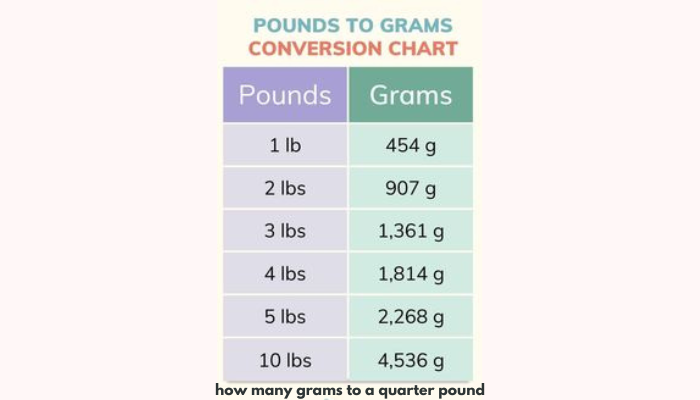

Let’s start with the straightforward answer you’re looking for. How many grams to a quarter pound, to be more practical for everyday use, most people round this to 113 grams or even 115 grams when approximations are acceptable.
This conversion comes from the basic relationship between pounds and grams. One full pound contains 453.592 grams. When you divide that by four to get a quarter of a pound, you arrive at 113.398 grams, which we typically round to 113.4 grams for precision.
Understanding this conversion becomes particularly valuable when you’re working between different measurement systems or communicating with people from countries that primarily use the metric system. A quarter pound is such a common measurement in cooking and food preparation that having this knowledge readily available saves time and reduces errors in the kitchen.
Why This Conversion Matters in Daily Life
You might wonder why a conversion like this would matter to you personally. The reality is that metric and imperial measurements coexist in our world, and depending on where you live or where your recipes come from, you’ll encounter both systems regularly.
Home cooks aren’t the only ones using this conversion. People who follow nutritional guidelines, work in food service, or manage dietary restrictions often need to convert between these measurements. If you’re tracking protein intake or following a specific diet plan that measures portions in grams, understanding quarter pound conversions is genuinely helpful.
Additionally, anyone who purchases items in bulk or works with international suppliers will find this knowledge practical. Understanding weight conversions prevents costly mistakes and ensures you’re getting exactly what you paid for.
Practical Cooking Applications for Quarter Pound Measurements
Beef and ground meat recipes often specify quantities in quarter pound increments. A quarter pound of ground beef, ground turkey, or ground lamb is a standard portion size that creates consistent results. When you scale a recipe or adjust it for more or fewer servings, knowing the gram equivalent makes the math easier. Instead of trying to divide a quarter pound into thirds or halves using imperial measurements, converting to 113 grams allows you to use a simple digital scale.
Butter is another ingredient where quarter pound measurements appear regularly, especially in baking. Many traditional cake, cookie, and pastry recipes call for a quarter pound of butter. Having this converted to grams means you can weigh your butter directly on a kitchen scale rather than trying to estimate based on standard stick packaging, which can vary by region.
Nuts and dried ingredients also frequently appear in quarter pound quantities in traditional recipes. A quarter pound of almonds, walnuts, or pecans provides a consistent starting point for nut-based dishes, while a quarter pound of dried fruit ensures balanced flavor profiles in baked goods and trail mixes.
Converting Quarter Pounds for Different Foods
While 113.4 grams is the weight equivalent for a quarter pound regardless of what ingredient you’re measuring, the volume of a quarter pound varies dramatically depending on the food. This distinction matters when you’re working without a scale or trying to understand recipe proportions.
A quarter pound of water weighs 113.4 grams and occupies approximately 113 milliliters, since water’s density is one. However, a quarter pound of flour, which is less dense than water, occupies roughly 425 milliliters or about 1.8 cups. This enormous difference explains why volume measurements can be so unreliable for cooking and baking.
A quarter pound of butter, with a density similar to other fats, takes up about 227 milliliters or roughly one cup. Shredded cheese occupies more space due to air pockets, so a quarter pound might measure closer to 1.5 to 2 cups depending on how tightly it’s packed and the specific type of cheese.
Quick Reference Chart for Related Conversions
Understanding how a quarter pound relates to other common measurements helps you work more flexibly in the kitchen. One quarter pound equals 113.4 grams, but you might also want to know related conversions.
In metric terms, 113 grams is slightly more than one-tenth of a kilogram. More practically, it’s about 0.25 of a 450-gram pound, which is the metric pound equivalent used in some countries. Understanding these relationships helps you scale recipes up or down based on the number of servings you need.
If you’re working with milliliters or cups and need to convert quarter pound measurements, remember that the conversion depends entirely on the food’s density. Always use a scale when possible for ingredients in quarter pound quantities, especially for baking where precision is critical.
Shopping and Label Reading Tips
When shopping for ingredients, whether at conventional supermarkets or specialty stores, you’ll notice that product labeling varies by country and retailer. Understanding quarter pound conversions helps you make informed purchasing decisions across these different systems.
Cheese packages often feature weights in both pounds and grams. A quarter pound block of cheese typically shows 113 grams on the packaging. If you’re comparing prices between different products, knowing this conversion lets you calculate the cost per gram and determine which option offers the best value.
Specialty and international foods sold by weight often display pricing per pound even when you’re shopping in a primarily metric country. If you want to purchase exactly a quarter pound of something like olives, nuts, or bulk spices, you can convert that to 113 grams and weigh out the exact amount you need.
Kitchen Scales Make Conversions Practical
Owning a digital kitchen scale transforms how you cook and bake, making conversions from quarter pounds to grams incredibly straightforward. Modern scales are affordable, accurate, and available in various styles and price points.
Digital scales also help when recipes provide measurements in different units. Some recipes list some ingredients in grams and others in cups or ounces. With a scale, you can convert everything to grams and work entirely in one measurement system, eliminating confusion and potential mistakes.
Investment in a good scale pays dividends over time, especially if you bake frequently or enjoy cooking from international recipes. The precision you gain makes your cooking more consistent, your baked goods turn out better, and you waste less food because you’re measuring accurately.
Summary and Key Takeaways
The weight stays constant at 113 grams regardless of what ingredient you’re measuring, but the volume varies significantly depending on the food’s density. This distinction explains why weight measurements are superior for cooking and baking compared to volume measurements.
Read Also: How Many Grams to a Quarter Pound: Complete Guide